SCEC Class B and Class C Security Racks: A Practical Guide
What buyers should know about SCEC Class B and C security server racks: locks, cable entries, serialisation and working with your security adviser.
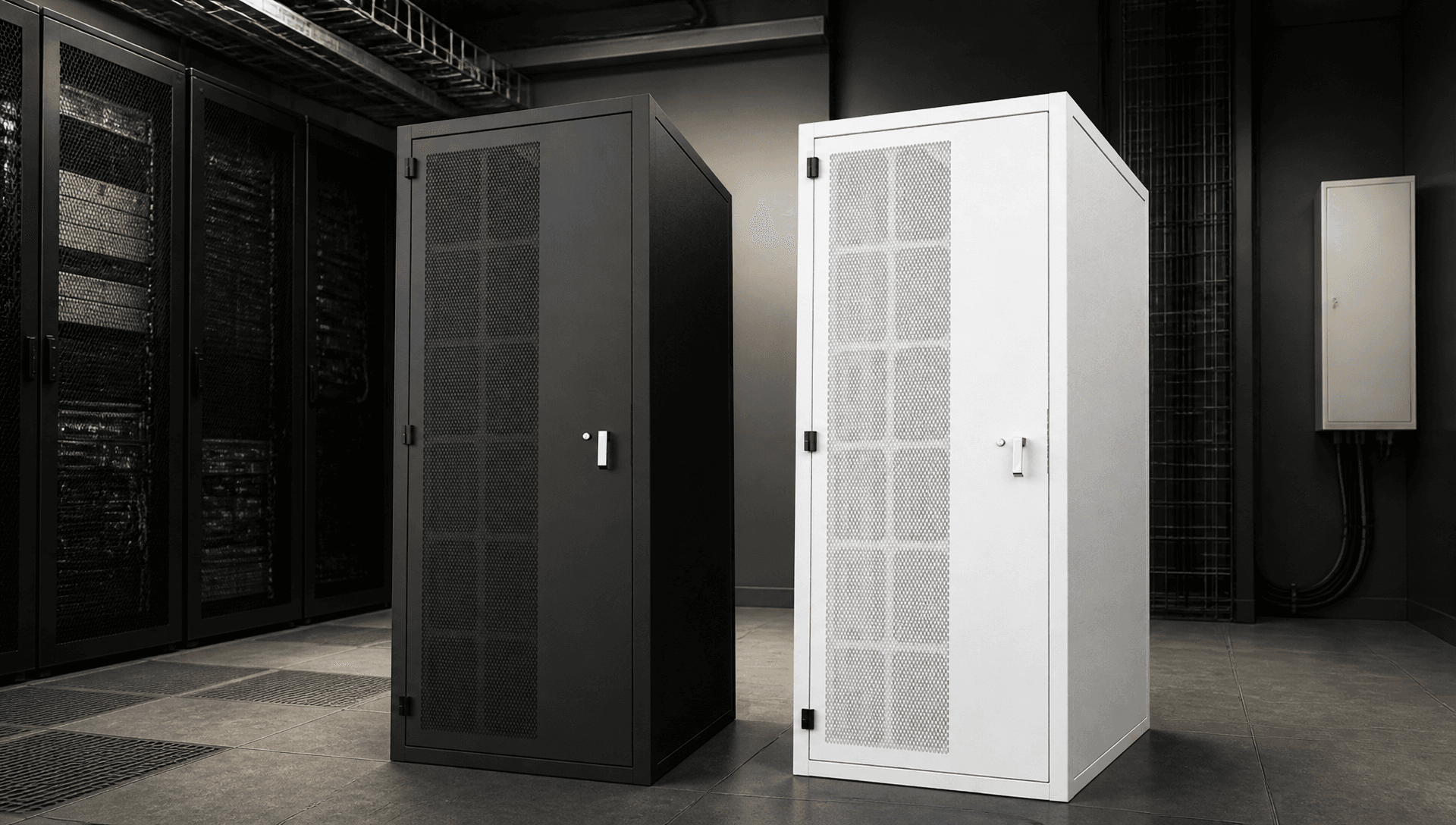
Government agencies, defence organisations and their contractors often need to house ICT equipment in security-rated enclosures. In Australia, that usually means equipment evaluated by the Security Construction and Equipment Committee (SCEC). This guide covers the practical points buyers should understand. It doesn't replace advice from your agency security adviser or the relevant protective security policy.
What SCEC is
The Security Construction and Equipment Committee evaluates security equipment for use by Australian government agencies. Endorsed products are listed on the Security Equipment Evaluated Products List (SEPL). Agencies and their contractors refer to the list, alongside their security policies and risk assessments, when selecting equipment.
Class B and Class C: the basics
SCEC classes describe levels of security performance. Broadly, Class B products provide a higher level of protection than Class C. The class you need depends on the information or assets being protected, the zone the equipment sits in and your agency's requirements. Your security adviser should confirm the class for each application.
Argent offers both. The Argent 50 Series security racks cover SCEC Class B and Class C (details), and the C Class wall-mount cabinet suits smaller secure spaces (details).
What makes a SCEC rack different
Construction
Security racks need robust construction that resists forced entry. Argent 50 Series racks use a fully welded zinc anneal steel frame. They're available as wall-mount units in 6, 12 and 18RU, as freestanding racks from 18 to 46RU, and in depths from 700 to 1200mm. Dual and triple compartment versions are available where different security domains share a footprint.
Locking
SCEC racks use endorsed locking hardware. On the 50 Series, Class B racks use KABA X10 combination locks, and Class C racks use Bi-Lock handles. The C Class wall-mount cabinet uses a concealed three-point SCEC-endorsed locking system with an SCEC-endorsed Bi-Lock.
Cable entries
Cables have to enter a security rack without creating a weakness. That's why you can't simply drill extra holes in a SCEC rack on site. Entries use compliant designs, such as baffles. Argent provides options guides for cable entries during the design stage. In one project, Argent designed a SCEC-compliant baffle system giving 18 cable entry ports for a rack used for patching (case study).
Serialisation and records
Each Argent 50 Series rack is individually serialised and name-plated, with a registry record, supporting asset management and audit.
Choosing the right rack
- Confirm the class with your security adviser.
- List the equipment, with sizes, weights, power and heat.
- Plan cable entries early: number, location and type.
- Consider compartments if multiple domains share a rack.
- Plan ventilation that keeps security intact.
- Allow time for sign-off. Drawings and 3D models help stakeholders approve designs before manufacture.
Common mistakes
- Under-specifying cable entries, then trying to add them on site
- Ordering before the class is confirmed
- Ignoring weight and floor loading for fully populated racks
- Leaving security sign-off until delivery
Argent's SCEC experience
Argent describes itself as an approved security equipment manufacturer, holding approval for SCEC Class B and C security server racks. The 50 Series was SCEC endorsed in June 2016, and Argent pioneered some of the first SCEC-endorsed C Class cabinets in Australia, starting in 2002. Argent racks are made in Sydney at OPIE Manufacturing Group's Emu Heights facility, under ISO 9001:2015 quality certification.
Frequently asked questions
Can I modify a SCEC rack on site? Generally no. Modifications can affect compliance. Talk to Argent and your security adviser before any change.
Do SCEC racks need special delivery or installation? Delivery and installation should follow your agency's security procedures. Argent can coordinate delivery and placement.
Can a SCEC rack have multiple compartments? Yes. Argent offers dual and triple compartment racks, which can be useful where different domains share a footprint.
How do I know which class I need? Your agency security adviser determines the required class based on your security policy and risk assessment.
Explore Argent's security range, read Building your data security with Argent 50 B&C Class racks, or contact our team.
